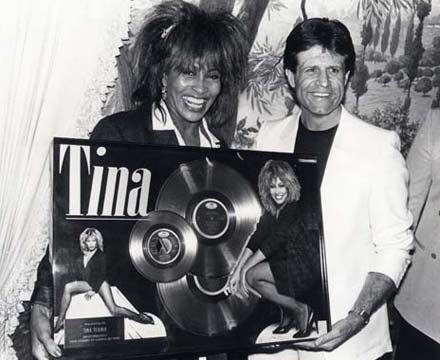
Harvard Business Review recently published an interview with the late Tina Turner which got me thinking.
Turner’s music isn’t really my thing: I’m more into world music, from Boban Markovic or Luiku to Hanggai. I find her life story far more interesting.
The interview reviews some of the key moments of her life: early success with her husband Ike, domestic abuse, and her unplanned decision to run away and live an independent life.
In her late 30s, she found herself alone in a hotel room with just a pocketful of change. From that, she rebuilt her life and career to become one of the world’s iconic singers.
It’s that turnaround which interests me as a coach. A new start, later in life. This is something that isn’t uncommon and, as the global centre of balance shifts more towards Asia and the global south, many of us in western economies are likely to find ourselves experiencing a similar mid-life fresh start – voluntarily or otherwise.
More and more western countries are falling into recession. Many are structurally destined for long-term decline. How do we prepare?
Many of the causes of economic problems are completely out of our hands. Here in the UK, for example, universities are facing an unexpected financial crisis as a result of economic problems in Nigeria, which have caused student enrolment to plummet suddenly. That’s on top of already severe economic challenges facing the higher education sector. The outcome? Lots of academics will face redundancy, and many more jobs in the surrounding communities which depended on student spending will also go.
That’s just one example in just one sector in just one country – but it’s indicative of how events can cause job losses out of the blue, even for experienced, well-credentialled people who thought they had a secure career.
So it makes sense to be ready for the unexpected. Just as people in areas threatened by natural disasters should always have an emergency go-bag packed and ready, it makes sense for us to have a “go-bag” ready for career emergencies.
If we don’t have one already, we need to think about how we’re going to create one – and there’s a lot to be learned from Tina Turner’s example.
First of all – and I’m putting this first because I think it’s really important – she had the ability to keep her personal and professional identities separate. She kept Anna Mae, the inner person, distinct from Tina the stage persona and brand. Too many of us, particularly men, don’t do this. We identify success as a person with our success in our career. Unexpected redundancy due to market changes doesn’t relate to our worth as a person – remember that!
Next, of course, we need to consider our assets, which come in different forms.
Naturally, we think here of financial assets. How much cash is available to you? How long will it last while you look for a new job? What is tied up in other forms but could potentially be turned into cash? As she sat in that hotel room, Turner only had a few coins in her pocket. The article doesn’t say, but I’ll assume that she had royalties and residual income from her career with Ike. Those wouldn’t be immediately, or easily accessible, but they were assets none the less.
What other assets do we have? Another important type is social capital: our relationships, contacts and extended networks. We can see that this was incredibly important. Although Turner was alone in that hotel room, she knew agents, and had plenty of industry contacts. Most important, she had good friends, who stepped up and helped her emotionally as she tried to rebuild her personal life and her career.
There are several ways in which this is important. One is – do we actually have friends? It may seem a strange thing to ask, but the truth is that a very large people in today’s western societies don’t have any close friends. It’s a symptom of the way we live and work today, and it’s a big problem. Just asking yourself the question – if you lost your job, who could you talk to – might be a realisation that perhaps you need to start working on rebuilding your friendship network now, before you really need it.
Another consideration is that in a time of economic troubles, your closest professional colleagues are likely to be your fiercest competitors. They’ll know the same people that you do, they’ll be aware of the same opportunities, and you’ll all be looking out for number one. So take time now to think about your weak ties: the people you know kind of amicably but vaguely; likely, people who are in fields or specialisms that are related but different to yours. They’ll be aware of opportunities that your immediate colleagues don’t know about, and they’re often far more likely to put people in touch with each other, simply because it’s easy for them to do it and it doesn’t cost them anything. It’s very much worth thinking of how you can remain on these people’s radar without being a nuisance, so that if you do need to get in touch they’ll be more likely to be responsive.
Turner also had another important asset: her faith and tools for resilience. In her case, they were her Buddhism, and her practice of chanting and meditating. There is in fact some evidence that having religious faith, or at least a belief that there is a higher power in life, is related to better health. Now it’s not my place or my role to suggest that you should be religious if you’re not! However, if you do follow a religious faith, but you don’t practice regularly… that might be something to work on. And if you aren’t religious… that’s great. Some practices such as meditation require no religious belief at all, but can be great sources of strength in difficult times.
The next thing to look at is what you want to do next and how to make that happen. It doesn’t need to be the same thing you were doing before. It might be related, or it might not be related at all. So this is another thing to be thinking about in advance: you’ll know what your options are if you suddenly need to start over. You may have skills that could tide you over or form a new career. Perform a personal skills audit. What do you know how to do, in any form, and how well?
Once you’ve done that, before you do anything else you’ll want to consider the elements of your personal brand. If you find yourself trying to relaunch yourself later in life, it’s entirely likely that you haven’t had to do this for many years. A personal brand doesn’t mean something like having a personal logo – you’re (probably) not a knight in shining armour, and you don’t need a coat of arms! Your brand is the way people think about you and how they respond emotionally. You need this as well as your formal skillset and paper qualifications, because your brand is what will lead people to choose you (or not) from a group of equally qualified and experienced candidates. So, it’s really important to think about the values you represent, and the way you present yourself in a narrative.
Tina Turner stayed in the same industry, but she was changing from being part of a couple to being a solo artist. She already had a reputation and name recognition. She had an existing audience. These needed to be brought along with her as she repositioned herself and found new fans.
She’d had a tough life and gone through traumatic experiences but she was savvy enough to turn those around and build a brand on them, appealing to those who could relate. She built a new narrative around herself, as a tough and independent woman who had overcome huge obstacles to become a success, and who wouldn’t stand for any nonsense.
And we can be pretty certain that it was this personal brand that immediately brought her to mind for the role of Aunty Entity in Mad Max: Beyond the Thunderdome. She didn’t seek it out; they came to her. It was her strong and distinctive personal brand which allowed her to fulfil her dream of being an actress.
So what would your personal brand be? Think about all the things you’ve gone through and learned in your life. Perhaps review your CV, entry by entry, and think about how each experience shaped you, and changed you, and gave you something you’d like the world to know. Then make it into a convincing and persuasive story.
Do all of this as soon as you can – before any disaster strikes, and before you need it. That’s your career go-bag – and it’ll be there for you to grab when you do need it.
Preparing a career go-back involves a pretty comprehensive review of where you are in your life overall, not just your career – and that alone makes it a good thing to do. Good luck, be kind to yourself, and have fun while you do it!
Photo by Don Grierson – Don Grierson, CC BY-SA 4.0 via Wikimedia Commons.
 Traethiad